What is Bitcoin?
What is Bitcoin?
Bitcoin (BTC) is a digital currency – also called a cryptocurrency – that can be traded for goods or services with vendors who accept Bitcoin as payment. With Bitcoin, holders can buy, sell and exchange goods or services without a central authority or a bank as an intermediary.
Bitcoin is one of the best-known digital currencies today, its value having risen dramatically since it went on the market in 2009. Satoshi Nakamoto, the pseudonym of Bitcoin's creator, stated that the purpose of Bitcoin is to work as an independent electronic payment system based on cryptographic proof rather than trust. Some holders buy bitcoins as an investment, expecting BTC to gain in value, while individuals and companies use it or accept payments in it as a currency. PayPal, for example, currently supports Bitcoin transactions, and the country of El Salvador has adopted Bitcoin as an official currency.
Bitcoin-to-Bitcoin transactions are carried out through the digital exchange of anonymous, heavily encrypted hash codes over a network of equal peer-to-peer access (P2P). The P2P network monitors and verifies the transfer of Bitcoin between users. Every user's bitcoins are held in a program, or piece of code on the blockchain, called a digital wallet, which also stores every address and transaction the user sends and receives bitcoins from, as well as a private key known only to the user.
In the US, bitcoins are controversial because they can be used to transfer illegal funds anonymously or to hide undeclared income from the Internal Revenue Service. By design, the issuance of bitcoins is capped at 21 million coins, of which ~19 million have already been mined. That makes Bitcoin scarce and so keeps in check the inflation that could arise if the supply of the cryptocurrency were unlimited. According to the Gadgets 360 article titled “Bitcoin mining: how many coins can be mined in total and how does that affect pricing?” 83% of all the bitcoins that will ever exist are already in circulation.
How does bitcoin work?
Bitcoin was created around a distributed digital record called a blockchain. A blockchain is a kind of public book or public accounting ledger - a digital system for recording transactions and their related data in many places at once. The blocks in a blockchain are units that hold the data of each transaction, including date, time, value, buyer and seller and an identifying code for every exchange.
A blockchain is designed to make hacking the system or falsifying the data stored in it extremely difficult, which makes it secure and immutable. Every computer in the blockchain network holds a copy of the ledger, so as to prevent single points of failure. If one block is altered, all the other blocks in the distributed ledger have to be altered as well. A blockchain is a decentralized technology, which means it is not controlled by any single organization. On top of that, the identifying codes (the cryptography) make the unauthorized creation of blocks difficult to the point of being almost impossible.
Bitcoin is kept in a digital wallet application on a computer or a smartphone, called a wallet. Cryptocurrency wallets are one of the best ways to store and protect Bitcoin. There are also several types of wallet. Software wallets let users keep any amount of bitcoin on a computer or a mobile phone for everyday use, with the balance held in a separate offline wallet. It is advisable to keep only a small amount of Bitcoin in a software wallet. That protects the bulk of a user's bitcoins from malware trying to intercept the password used to access the wallet.
Offline wallets are wallet software installed on a USB stick or another medium rather than on the internet, so that it can be kept physically secure. Hardware wallets, another form of offline wallet, are physical devices such as a USB flash drive or an NFC device that stores the user's private keys. Even when they are connected to another device, the private keys are never exposed, because signed transactions are carried out on the device itself. Multi-signature wallets require two or more private keys to authorize a transaction. They are called Multi Signature Wallets, or multi-signature wallets. That significantly reduces the chances of the wallet being accessed if it is lost or stolen. One key is kept somewhere safe as a backup, another is kept on the user's mobile device, and a third key can be kept with a multi-signature provider.
People can send bitcoin to others by transferring bitcoin from wallet to wallet. Bitcoin can be sent by initiating a transfer request from a bitcoin address in the customer's wallet to a bitcoin address, or alphanumeric key, in the recipient's wallet. Senders can choose the amount to transfer either in bitcoin or in their local currency. Every bitcoin transaction carries a small fee, which is paid to a Bitcoin miner. That fee can vary depending on factors including how quickly the bitcoin transaction has to be confirmed.
What is Bitcoin mining?
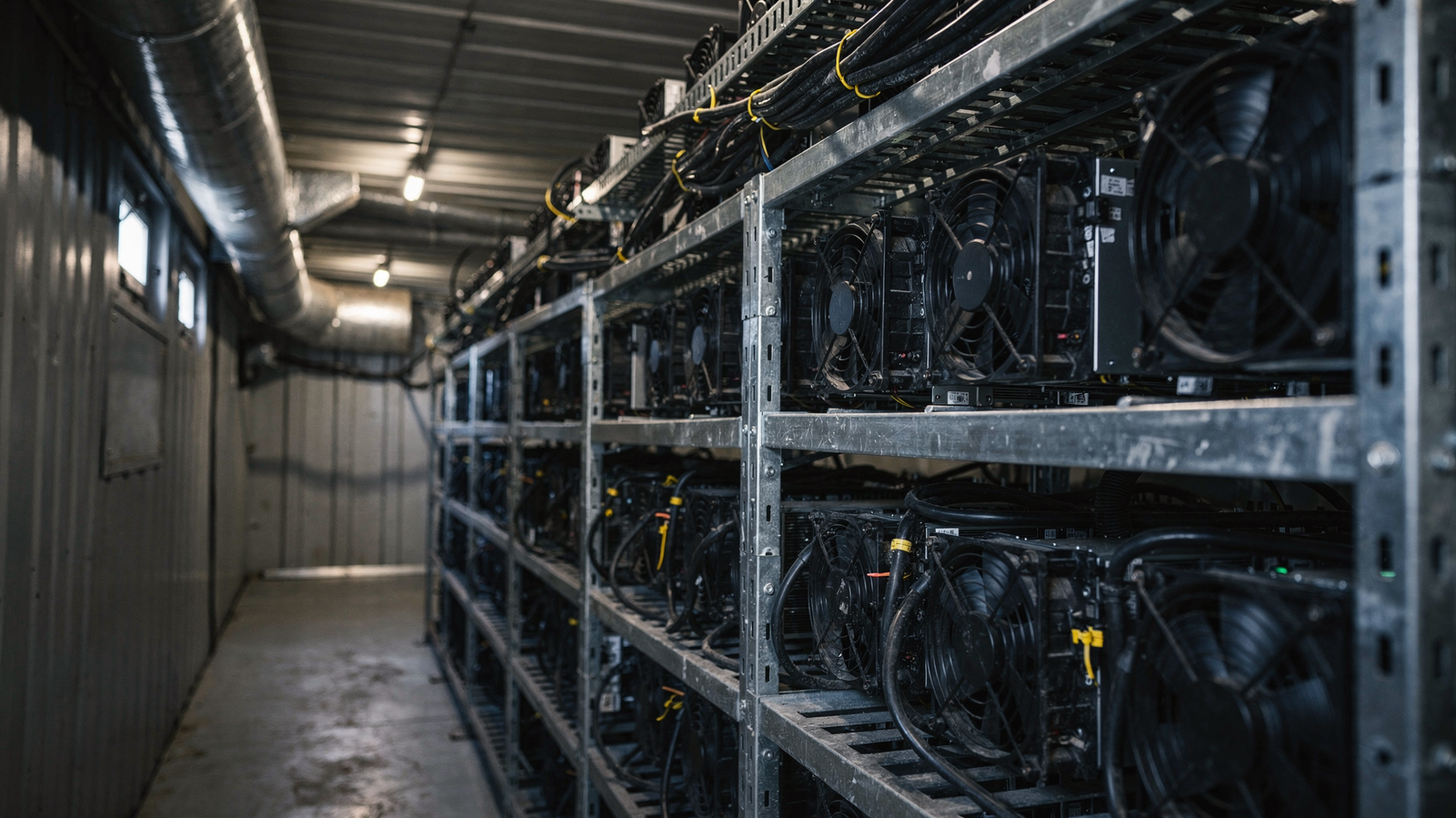
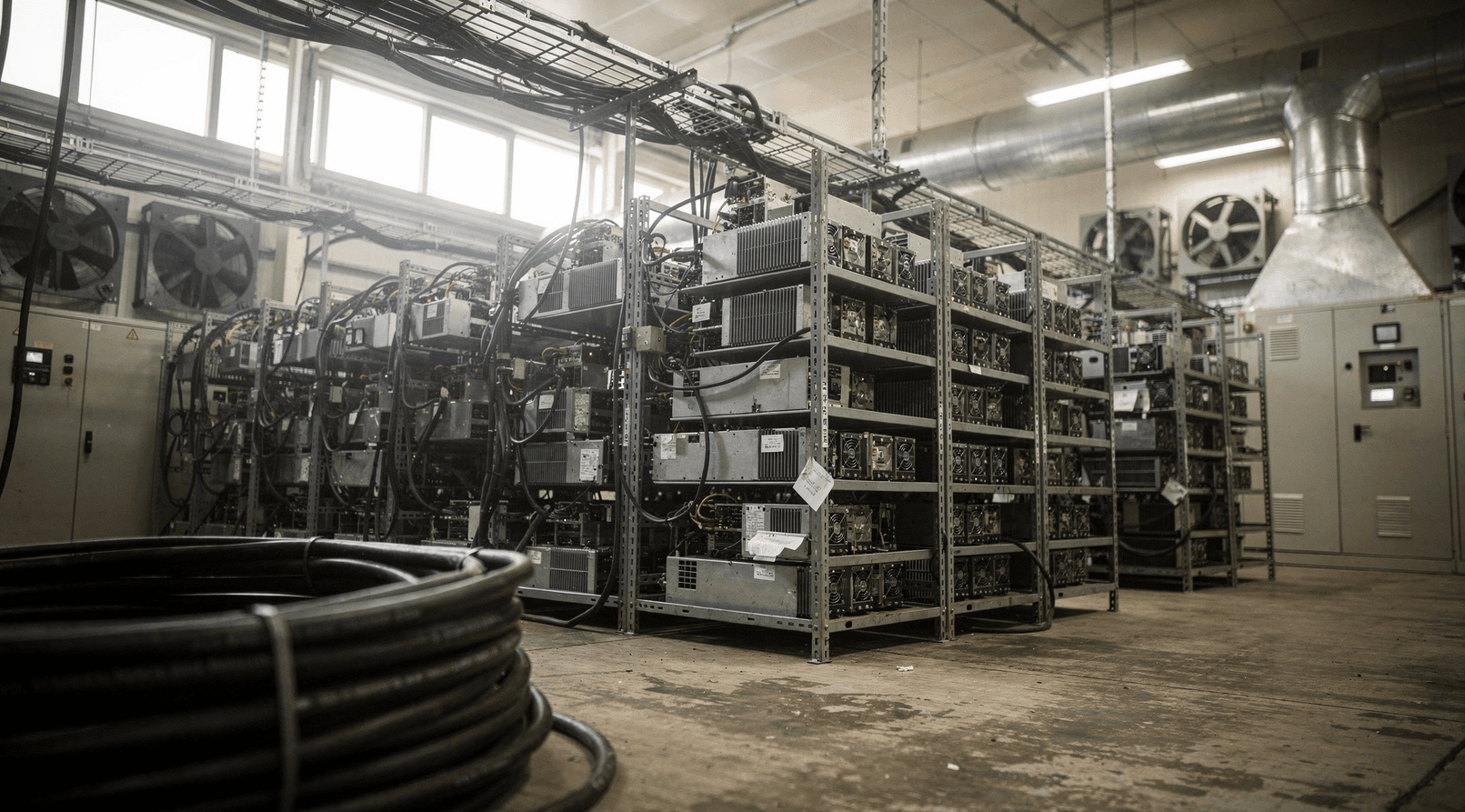
Bitcoin mining is the process of adding new transactions into circulation. Bitcoin miners use software with access to the blockchain in order to solve algorithms tied to transactions. In return they receive a set number of bitcoins per block. These are called miner rewards. That is what entices crypto miners to keep solving the transaction-related algorithms, keeping the whole system running. The process is called proof of work. / Proof of Work /
In the beginning, Bitcoin mining was done on the processors, or central processing units, of individual computers, where more cores and higher speed meant more profit. After that most bitcoin miners moved to systems with multiple graphics cards, (GPU), then to field-programmable gate arrays and application-specific integrated circuits (ASIC Miners). Those upgrades to miners' systems were made in an attempt to take on computing work at greater speed and scale, that is, more hash codes for every new block issued on the blockchain, and to use less electricity.
There was a time when anyone could mine bitcoins, but not any more. The Bitcoin code is written to make solving the transaction-related tasks and algorithms harder over time. That means solving those algorithms takes more computing resources. Access to powerful computers and large amounts of electricity is now a must. In the world of malware, one of the most widespread current threats is botnet infections of computer networks used for mining, where users' systems mine bitcoins without their owners' knowledge and the funds are routed to the owner of the botnet the attack comes from, that is, to their wallet. Business Insider India estimates that 100% of all bitcoins will be in circulation by 2140.
What is Bitcoin halving?
To reduce the number of new bitcoins created, the “halving” event cuts the rewards for receiving and validating transactions on the blockchain. This event happens roughly every four years, in order to slow the mining process down and reduce the new bitcoins created. The measure is anti-inflationary, built in when the first Bitcoin blockchain went into circulation.
When Nakamoto created Bitcoin, the supply was capped at 21 million coins. The reward for miners was initially 50 bitcoins per block, but it has been halved four times since. As of April 2024 the reward has fallen to 3,125.
Halving is meant to reduce the issuance of new coins and shrink supply, affecting Bitcoin and its value positively if demand stays the same or grows.
Why is Bitcoin valuable?
Bitcoin has value much like other currencies, because other people are willing to exchange them for goods, services and existing currencies. Even so, the price of Bitcoin has risen, fallen and risen exponentially again many times over since its introduction in 2009. Many people consider the swings unstable. Prices have gone up and down on the market for a number of reasons, including companies adopting or withdrawing support for the currency, and even what celebrities say about it.
Bitcoin's value, however, is also derived from other sources. For example, for a currency to be accepted it has to have some form of scarcity, divisibility, portability, durability, inflation and it must not be easy to counterfeit.
Bitcoin has the following characteristics:
• It is capped at 21 million coins.
• It is divisible to eight decimal places. The smallest unit, the Satoshi, is equivalent to 0,00000001 bitcoin.
• It is stored in digital wallets, which makes it easy to carry.
• It is not physical, so it cannot be destroyed. It can, however, be compromised if the hardware, the software or the cryptographic key to the wallet in question is lost.
• It is also protected against possible counterfeits by the blockchain and cryptographic keys.
How is bitcoin used?
Bitcoin is often used as a payment option or as an alternative investment. As a payment method, bitcoin can be used to buy goods and services. Although the number of vendors that accept the cryptocurrency is still limited, providers such as PayPal and AT&T are starting to accept bitcoin payments. The electric car company Tesla has also gone back and forth, having decided to accept payments in bitcoins. As a form of investment, individuals can invest in bitcoins to help diversify a portfolio of stocks and bonds.
What are the risks of Bitcoin?
The risks associated with Bitcoin include the following:
• Investment volatility. Bitcoin has no long track record or history of trust behind it. Prices rise and fall fast, and well-known people such as Elon Musk have pushed the value up by almost 10% and made it drop by 5% simply by posting tweets. In 2014 the price fell by 80% in a single day.
• No insurance. Bitcoin exchanges and wallets are not insured by federal or government programs. Unlike bank accounts, if something happens people are unlikely to get their bitcoins back.
• Exposure to ransomware attacks. Because transactions are carried out digitally and anonymously, Bitcoin is the currency of choice when hackers hold the data of unsuspecting victims to ransom.
• Regulatory restrictions. Bitcoin is also used for black-market transactions, which can invite restrictive government regulation. That problem is currently being addressed through a number of global regulations coming into force at the same time across the developed world.
How do you buy or invest in Bitcoin?
People can buy Bitcoin through a cryptocurrency exchange, with traditional currencies, or through Bitcoin ATMs. They can also swap other crypto currencies into Bitcoin, for example stablecoins (StableCoins) such as USDT into BTC. Exchanges are one of the most popular methods of buying bitcoins, since they are companies that let people buy and sell by opening an account. Examples of exchange software include Binance, KuCoin and Coinbase. Accounts also have to provide a funding source, such as a bank account or a debit card. On top of that, Bitcoin ATMs are connected to the internet, which lets people buy bitcoins with cash. Bitcoin ATMs work by carrying out a blockchain-based transaction that sends bitcoin to the user's digital wallet. Using them, however, may incur transaction fees.
Individuals can also buy and hold bitcoins like stocks. Some people buy and hold bitcoins for a longer period of time, others may buy and sell quickly once the price rises, and a third group may sell and bet on the price falling. There are also bitcoin individual retirement arrangements (IRA), which act as special retirement accounts for their owners.
Bitcoin technology opens up many possibilities, and it is the most modern branch of contemporary finance as we know it. Every technically minded, forward-looking person either owns Bitcoin or is about to buy some in the near future. And why not mine their first Bitcoin as well?